Have you ever looked at a sketch and felt a sudden urge to reach out and touch it, only to realize your fingers would hit flat paper? That momentary confusion is the ultimate compliment to a 3D pencil drawing artist. It’s a world where graphite isn’t just a medium—it’s a tool for bending reality.
In the digital age, where AI can generate imagery in seconds, there is something profoundly moving about an artist who can trick the human eye using nothing more than a wooden pencil and a sharp sense of perspective. It’s a marriage of fine art and physics, where every smudge and highlight is a calculated move to defeat the two-dimensional plane.
From the anamorphic “pop-out” spectacles to the gravity-defying objects, the soulful, liquid-realism, and the anatomical wonders, these creators are redefining what a sketchbook can hold. They aren’t just drawing subjects; they are constructing illusions that breathe, hover, and pulse with life.
In this post, we’re diving deep into the portfolios of these master illusionists to see how they turn a simple sheet of paper into a window to another dimension. Get ready to question everything you think you see these 3d pencil drawing.
1. Mind Bending 3D Pencil Drawing by Sushant S. Rane
No list of 3D icons is complete without Sushant S. Rane (@sushantsrane). A pioneer in the hyper-realism scene, Sushant became an international sensation for his ability to draw everyday objects with such staggering precision that they look like they were simply placed on the paper rather than drawn onto it.
Based in Mumbai, Sushant’s work is the definition of “seeing is believing.” His artistic profile is built on:
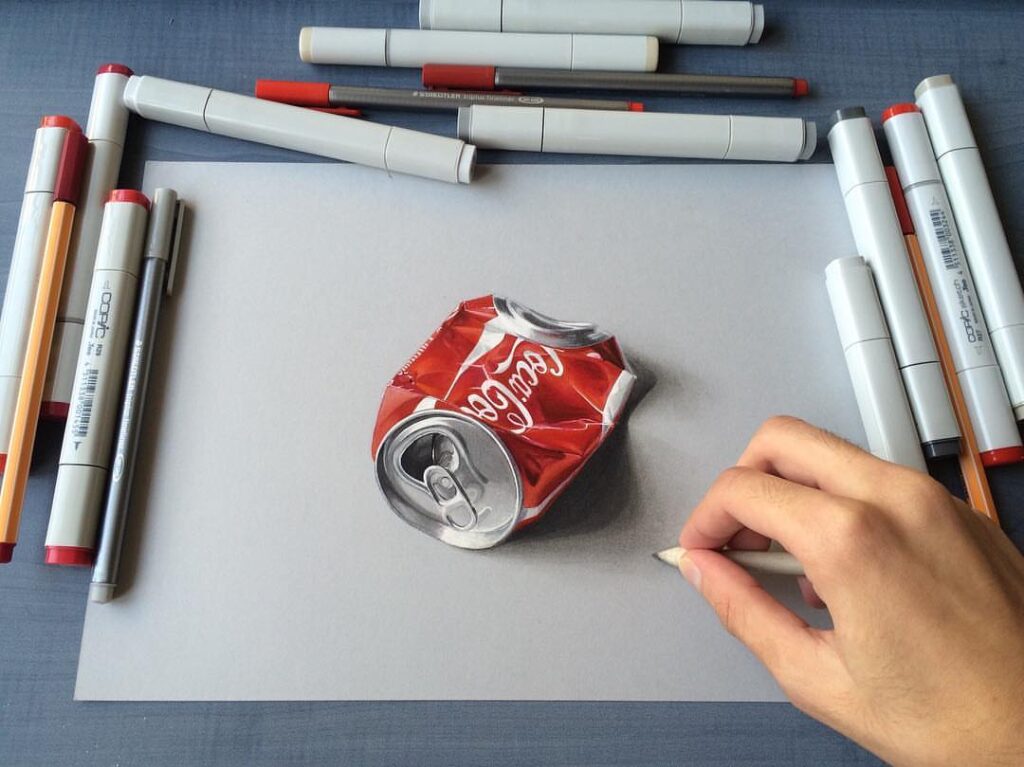
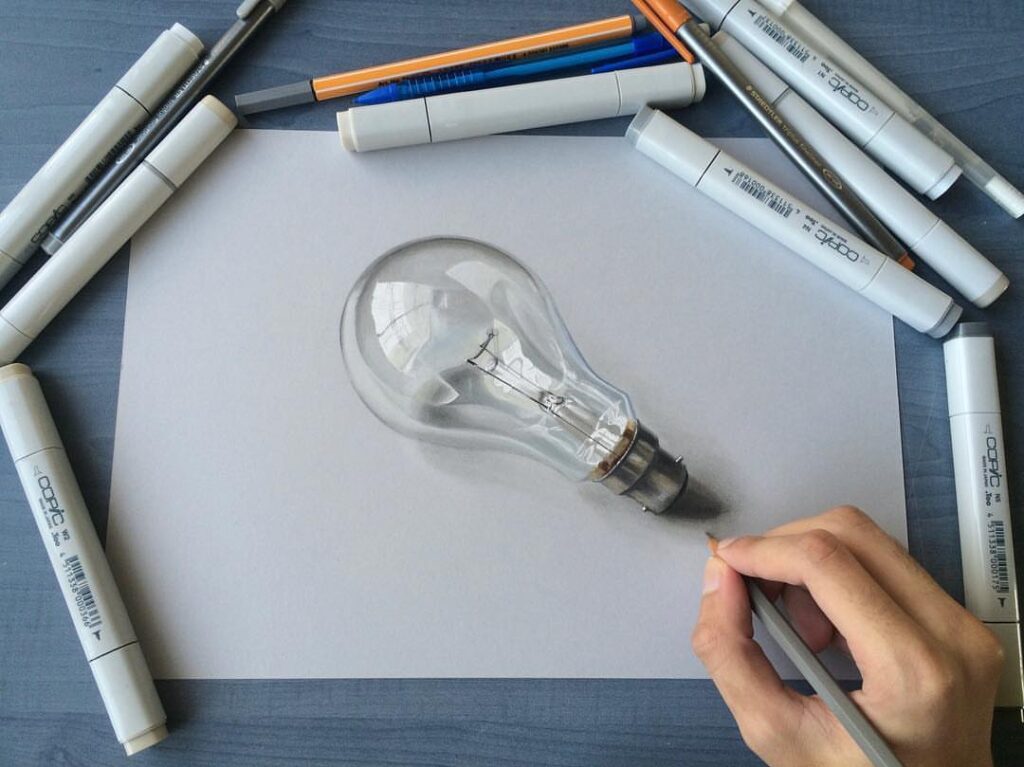
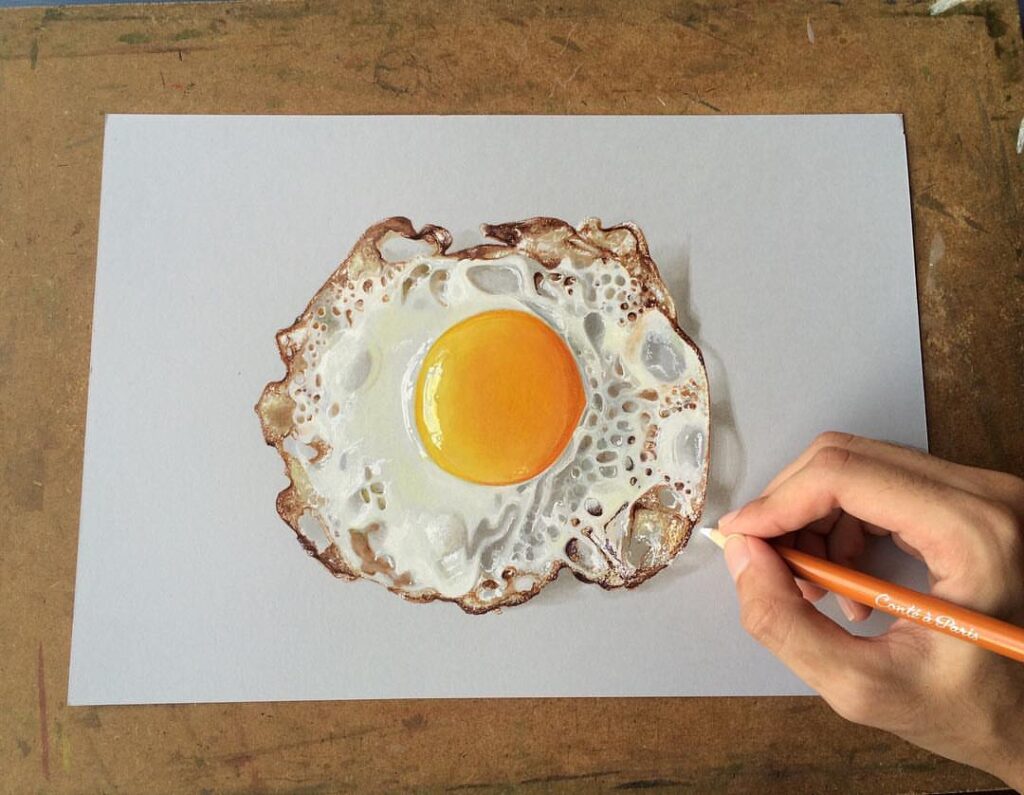
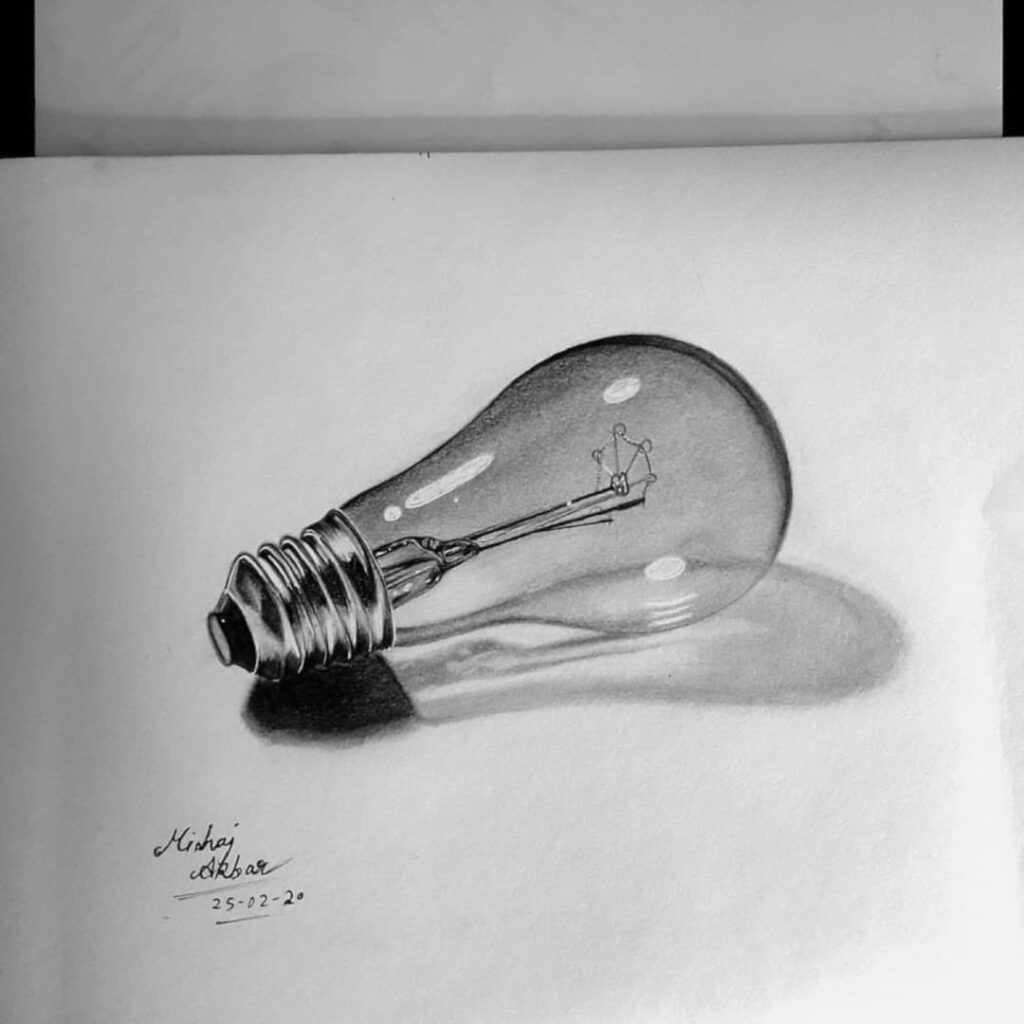
The “Everyday” Illusion: While some artists focus on grand fantasy, Sushant finds magic in the mundane. His most famous pieces include a fried egg (complete with glossy, translucent oil), a shattered lightbulb, and a chilled Coke can with realistic condensation.
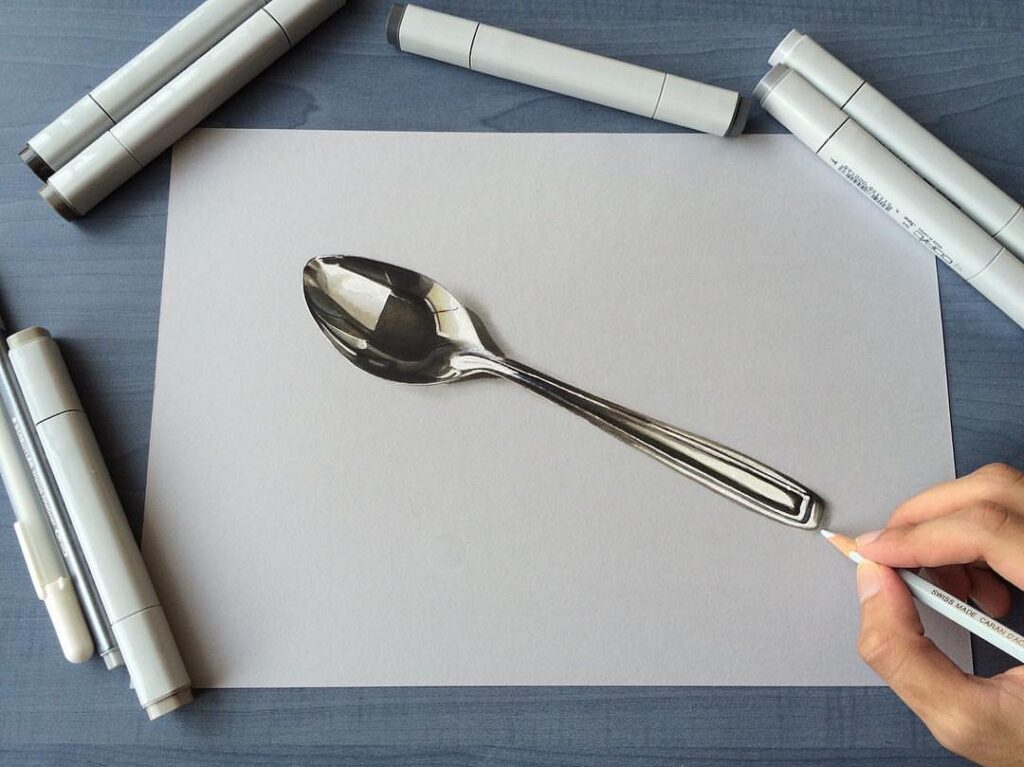
Mixed Medium Magic: He is a master of blending graphite pencils with Copic markers. This combination allows him to achieve deep, photo-real shadows alongside vibrant, saturated colors that give his objects “weight.”
Speed and Precision: Known for his efficiency, Sushant often completes these complex, mind-bending pieces in just one to two days, frequently sharing time-lapse videos that prove no “camera tricks” are involved.
Let’s see some of his wonderful creativity that blow your mind,
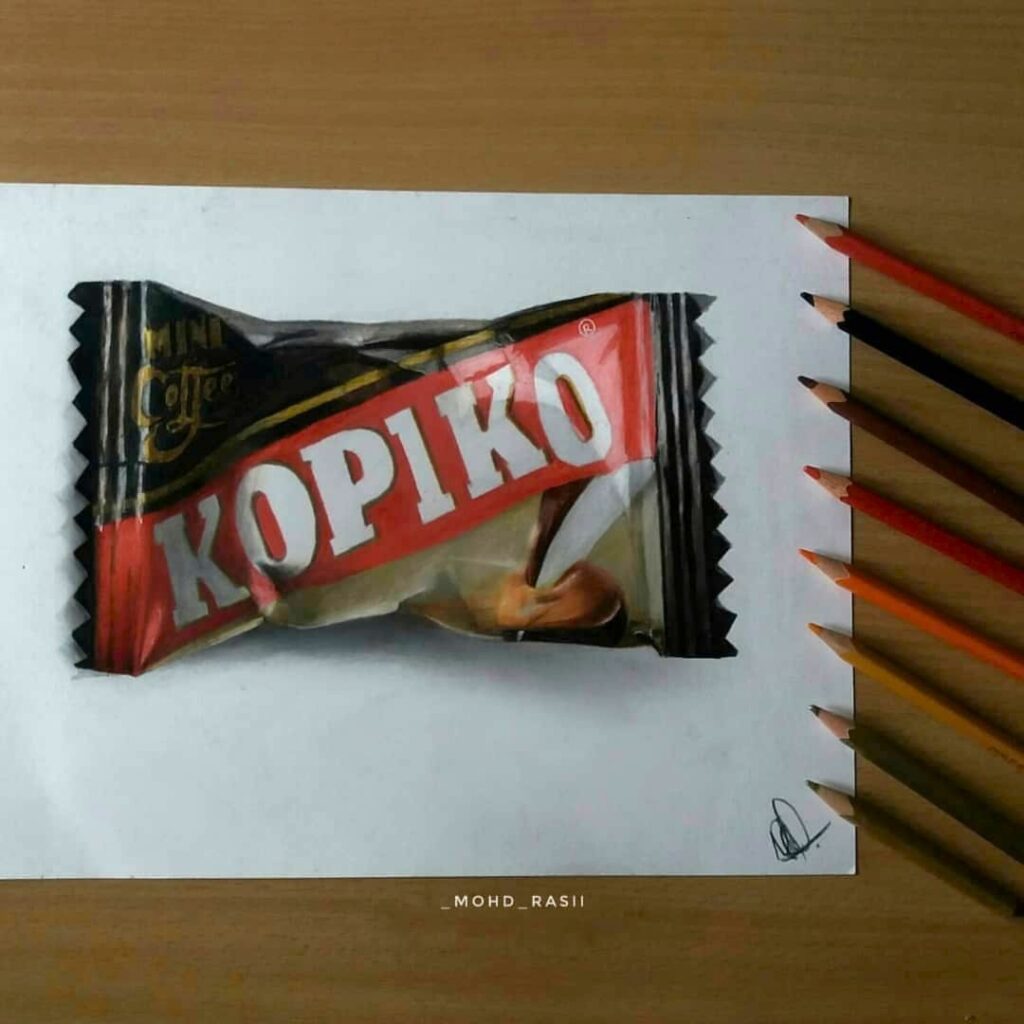
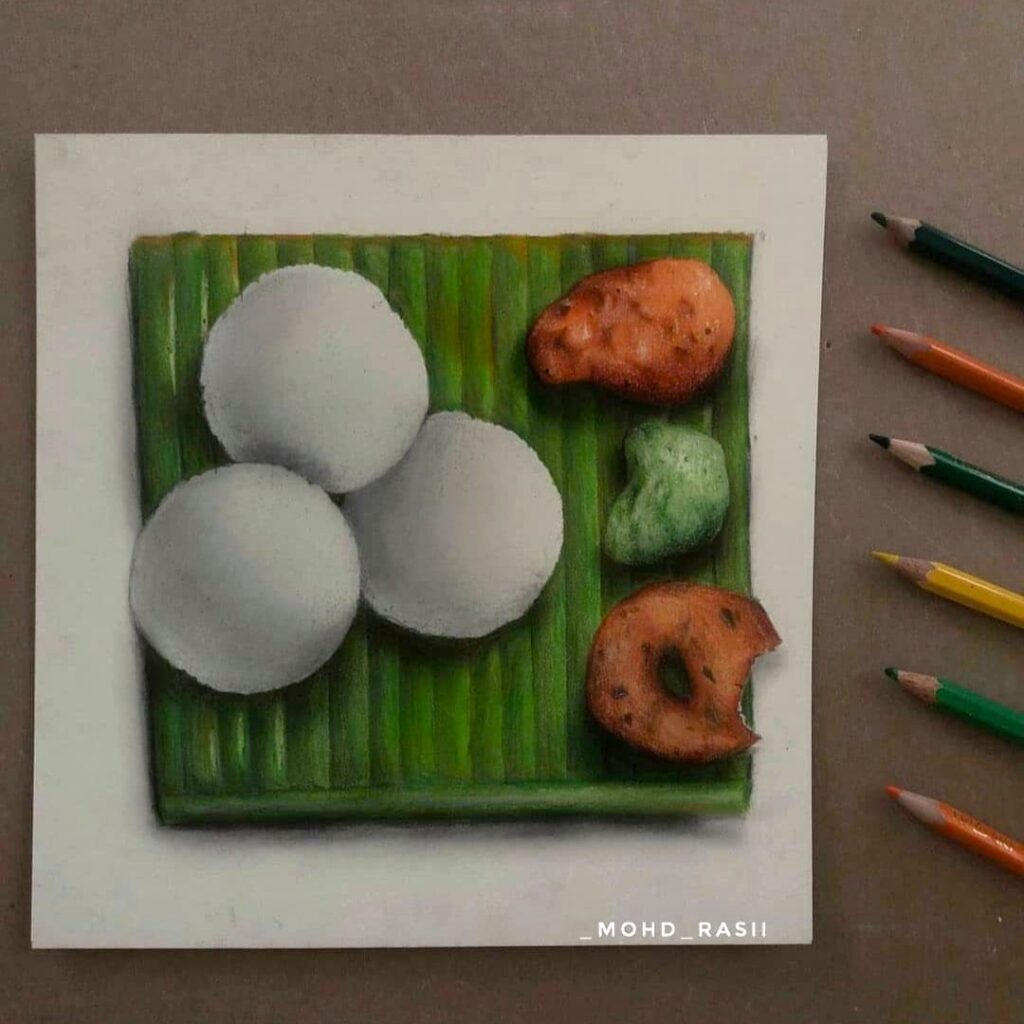
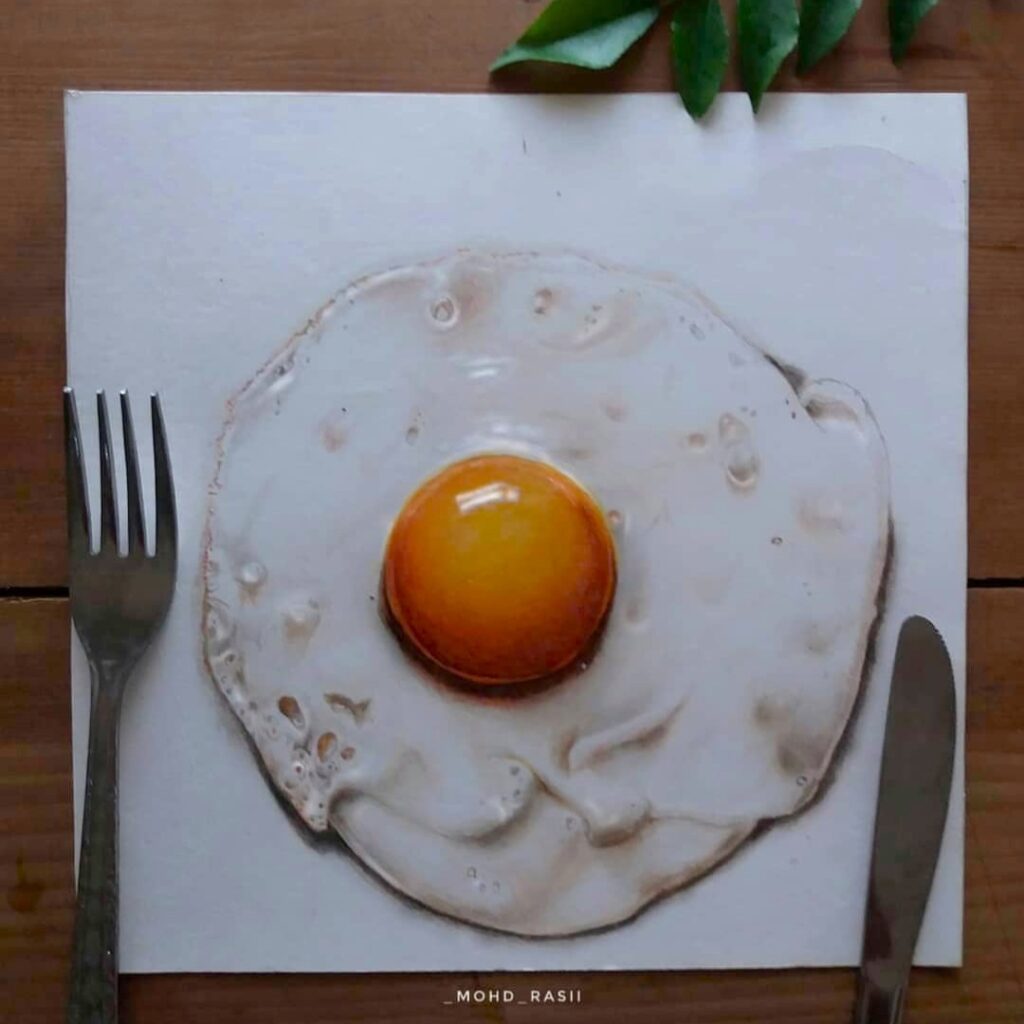
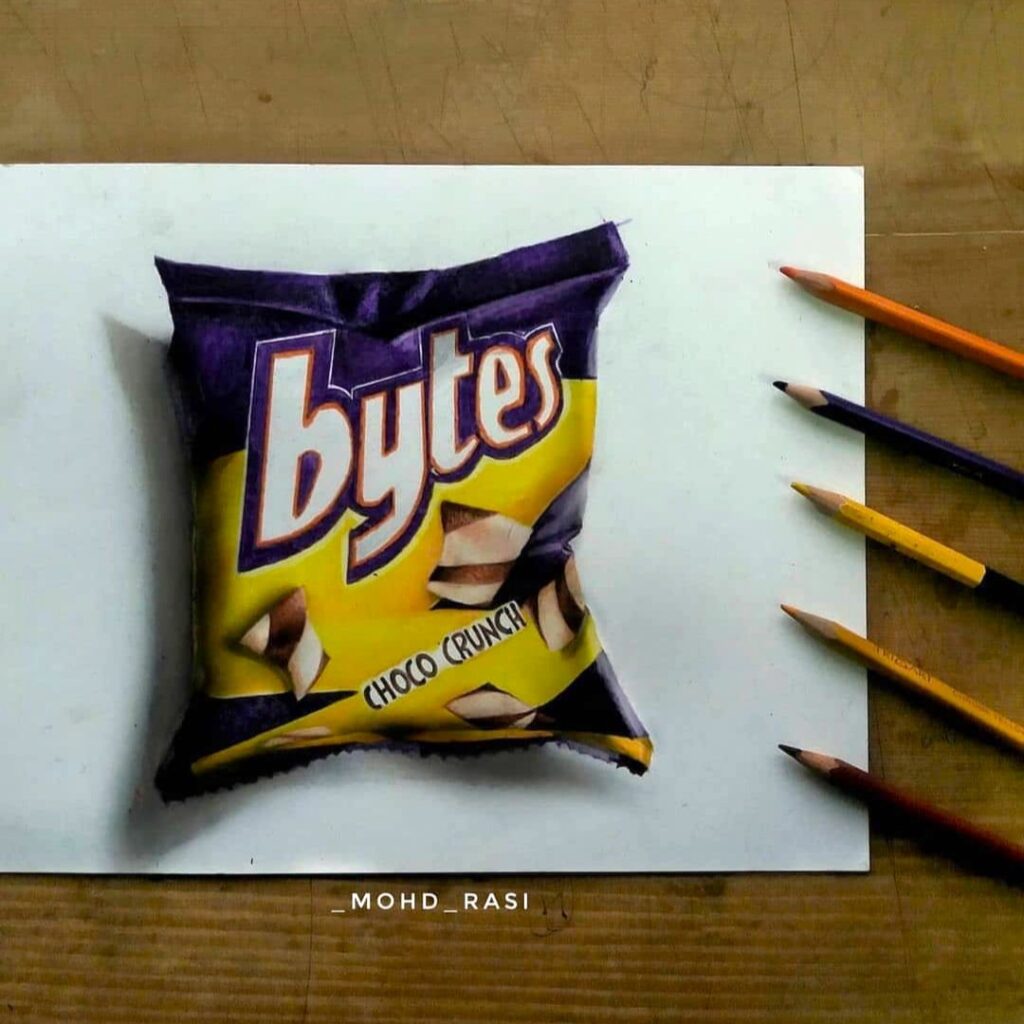
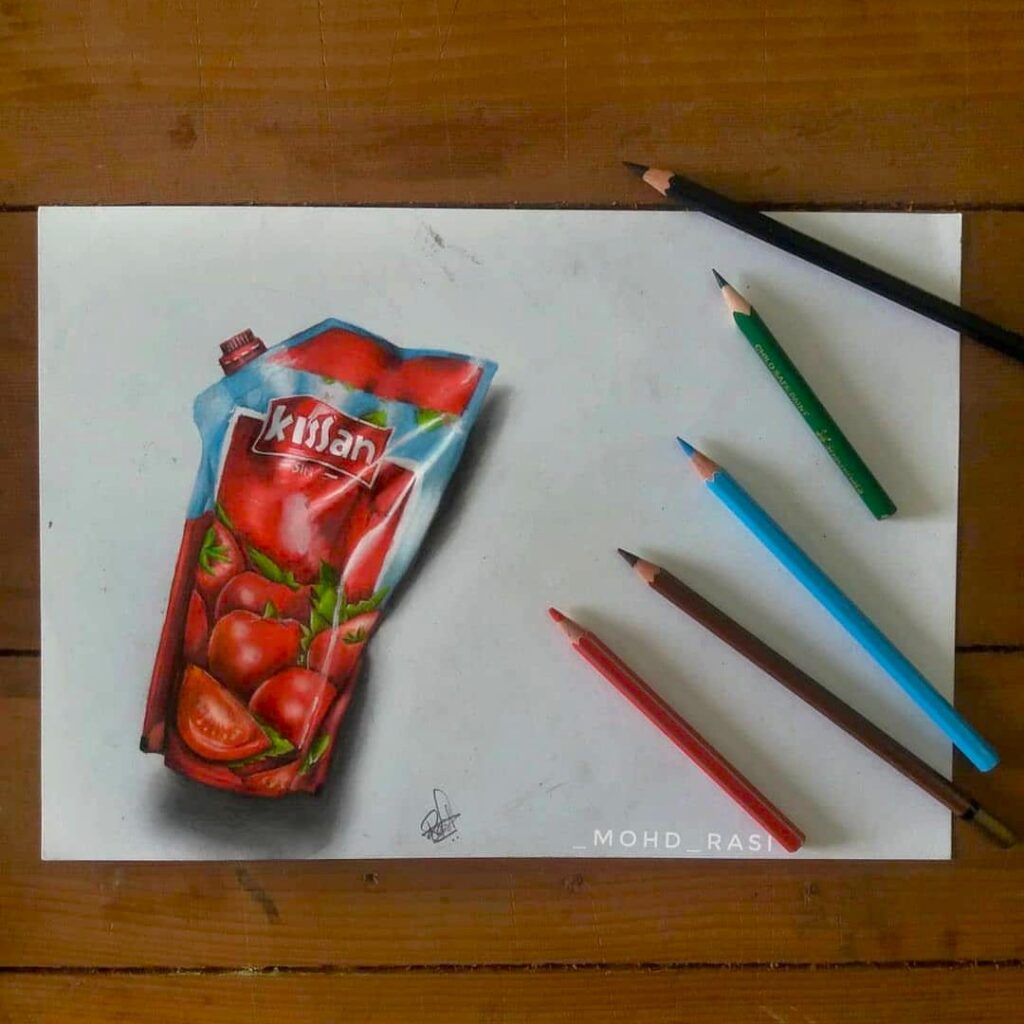
2. Realistic illusion 3D Pencil Drawing by Mohd Razi
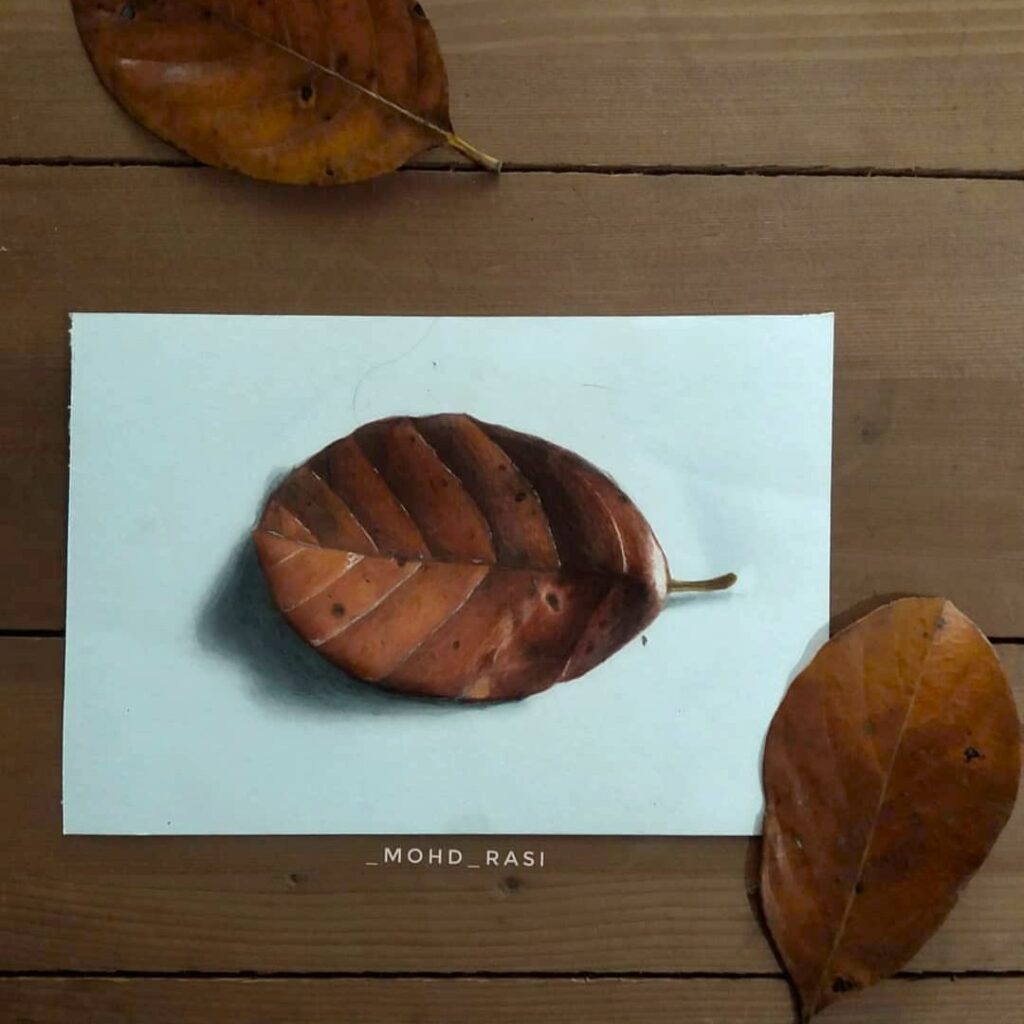
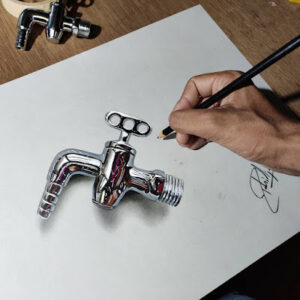
Mohd Razi is the virtuoso of technical subtlety and “touchable” realism. Based in India, Razi has gained a dedicated following for his ability to transform a standard sheet of sketch paper into a three-dimensional stage.
Razi’s work is a masterclass in optical illusion, specifically focusing on how light and shadow interact with everyday objects. His artistic signature includes:
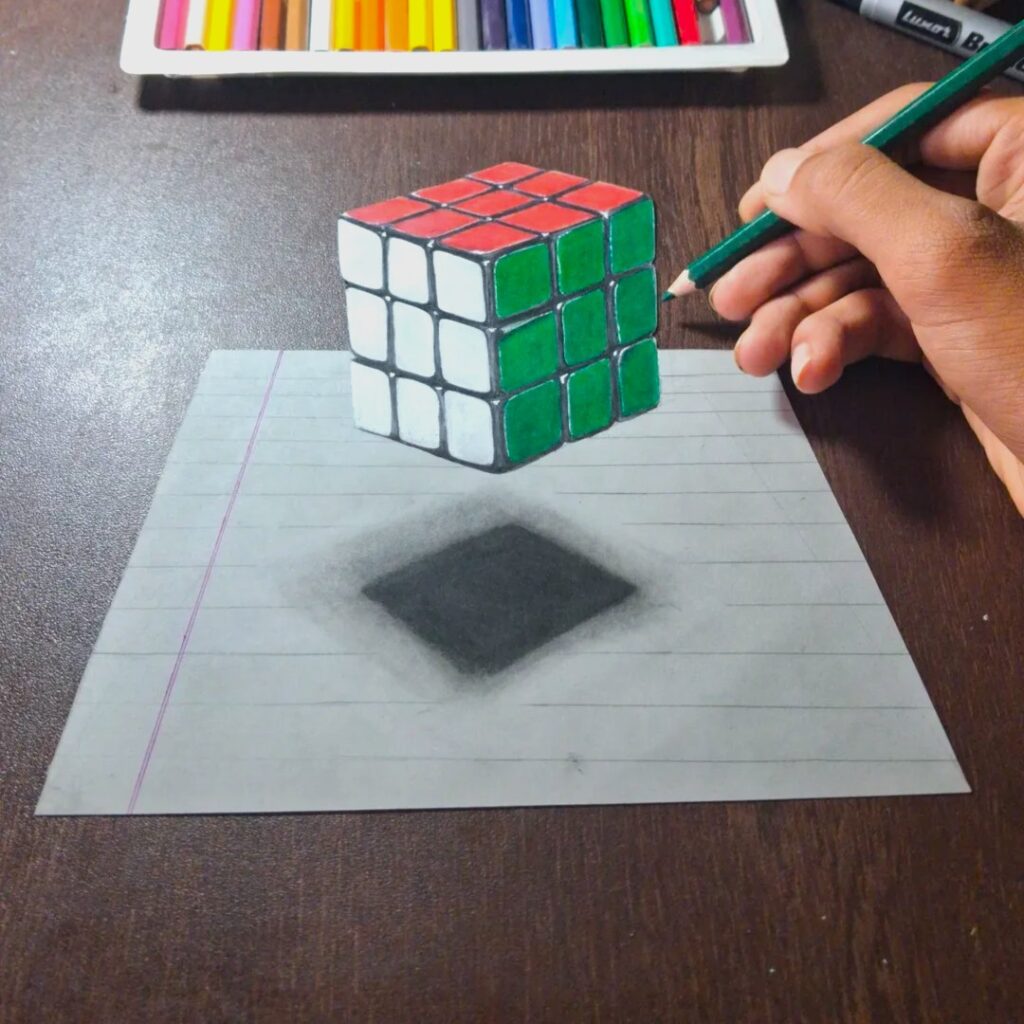
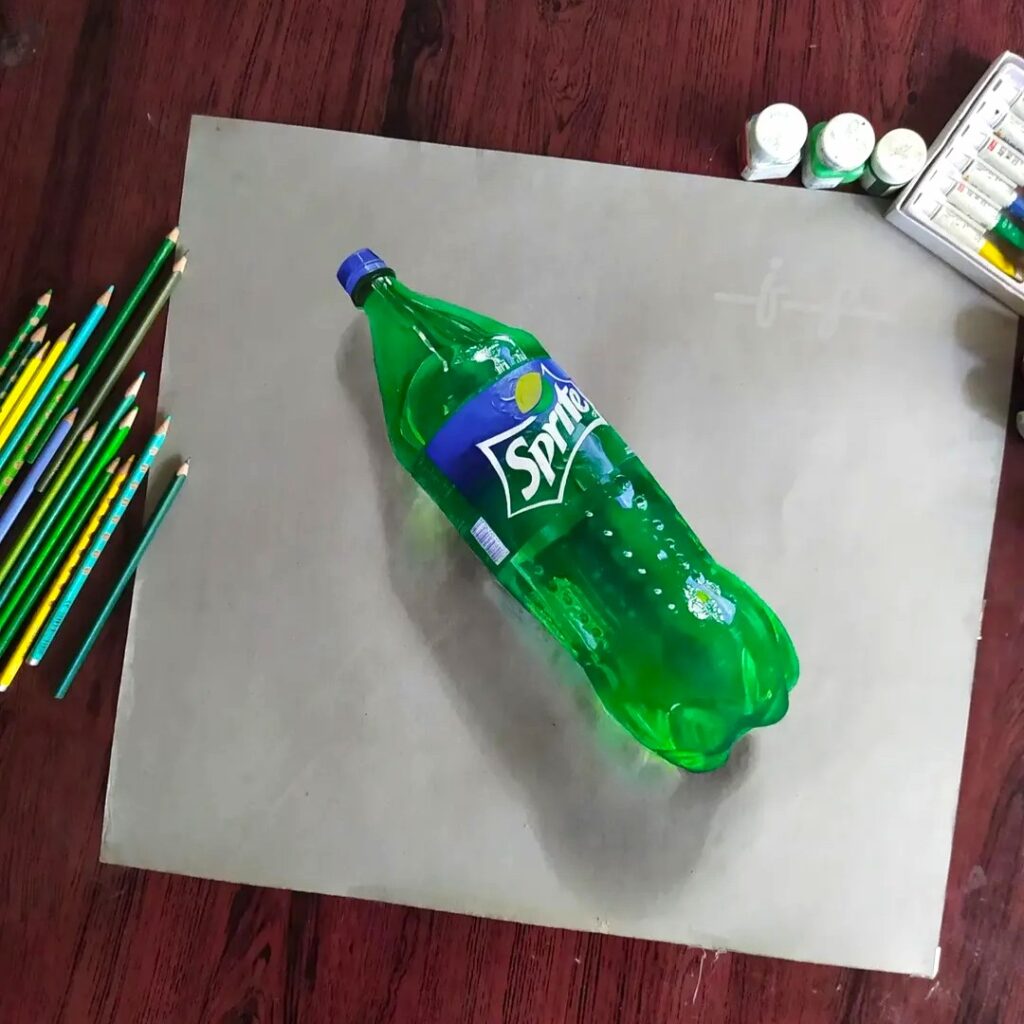
The “Shadow Lift”: Razi is a specialist in the floating effect. By meticulously separating the object from its cast shadow, he makes soda cans, insects, and pencils appear to hover inches above the page.
Tactile Texture: Whether it’s the cold, metallic sheen of a crushed can or the delicate, translucent wings of a butterfly, his use of soft graphite and charcoal creates a texture you feel like you could actually touch.
Interactive Storytelling: Many of his pieces aren’t just drawings; they are performances. He often films his hand “interacting” with the art—pulling a drawn string or “trapping” a drawn insect—to prove just how convincing the 3D effect truly is.
Anamorphic Perfection: Razi excels at the “stretched” drawing technique. When viewed from a flat, top-down angle, his sketches look like elongated abstractions—but through a camera lens at a 45-degree angle, they snap into perfect, solid forms.
For any aspiring artist, Razi’s profile serves as a reminder that 3D pencil drawing isn’t just about what you draw, but about how you manipulate the white space around it.
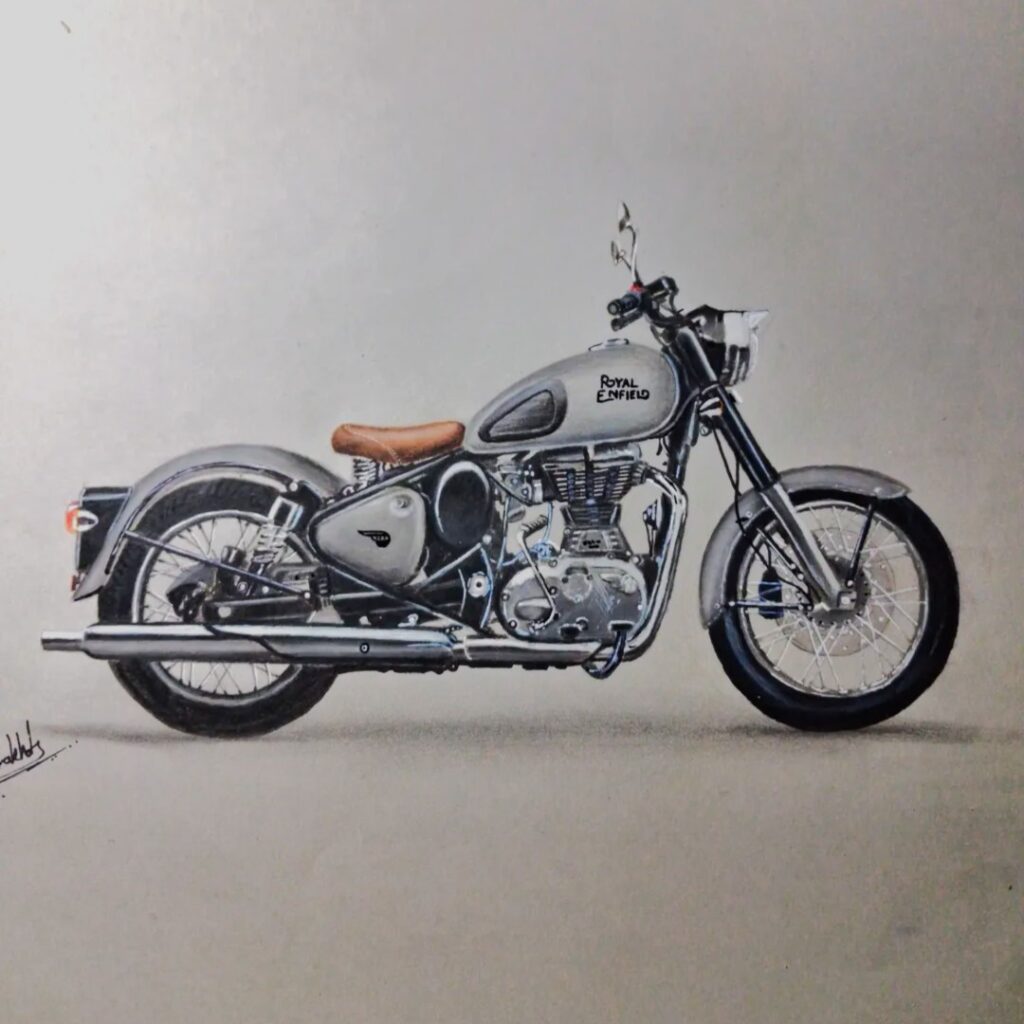
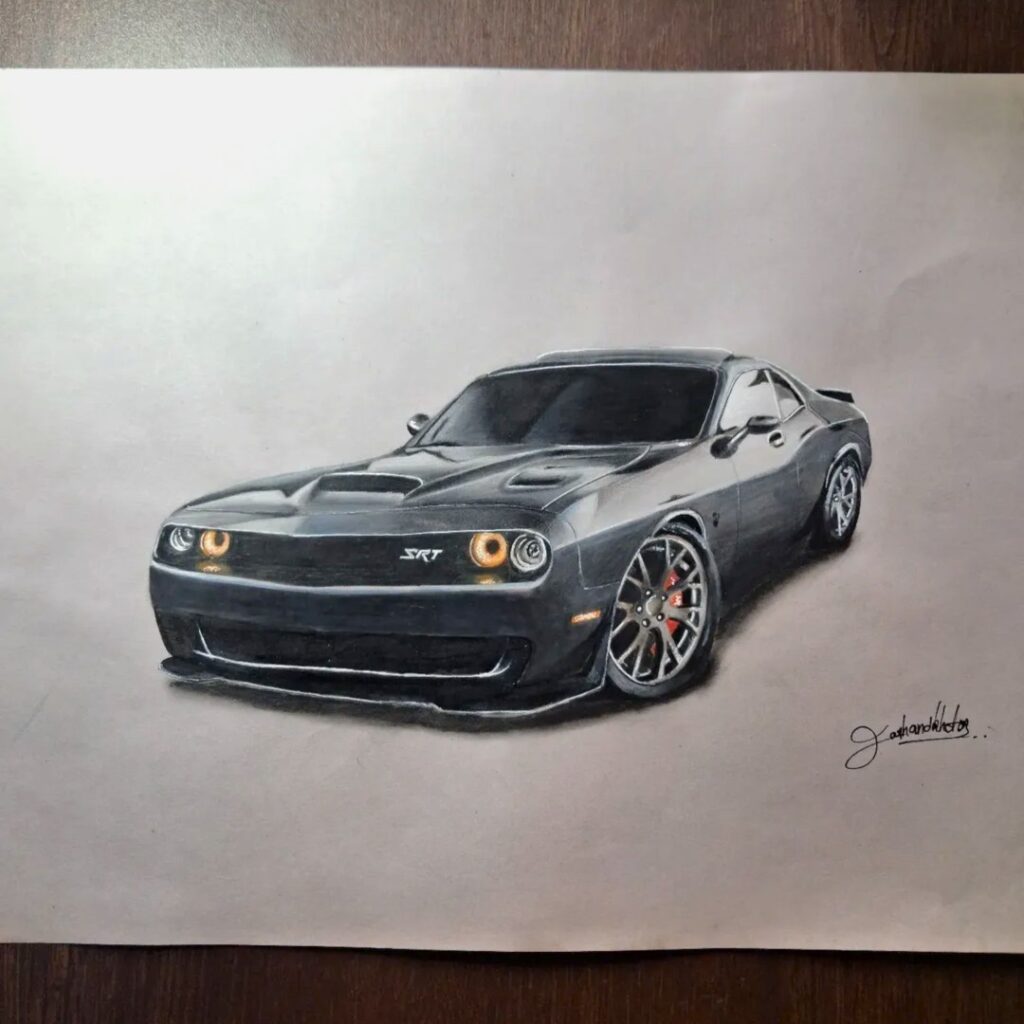
3. The Cinematic 3D Pencil Drawing of Farru Artist
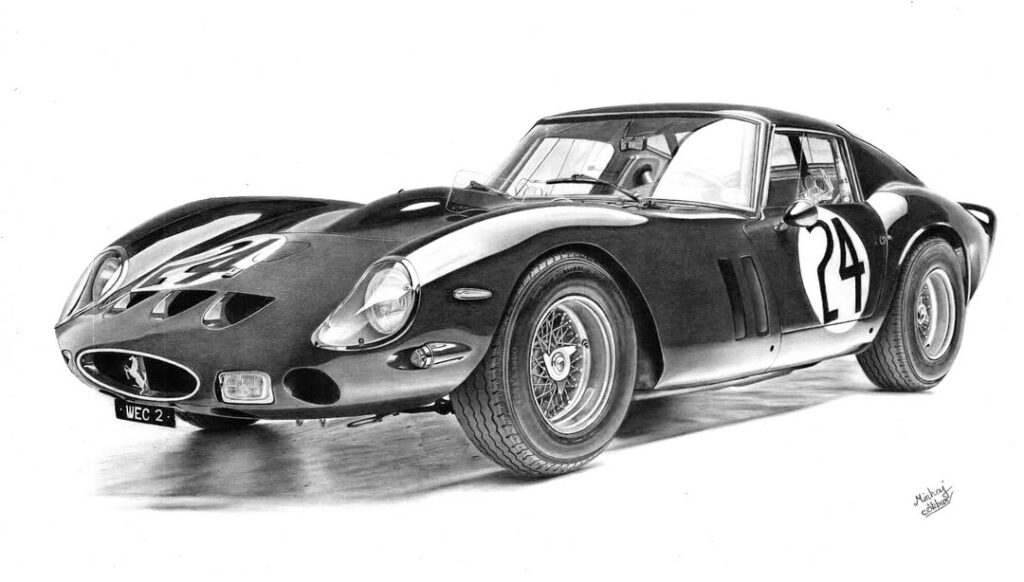
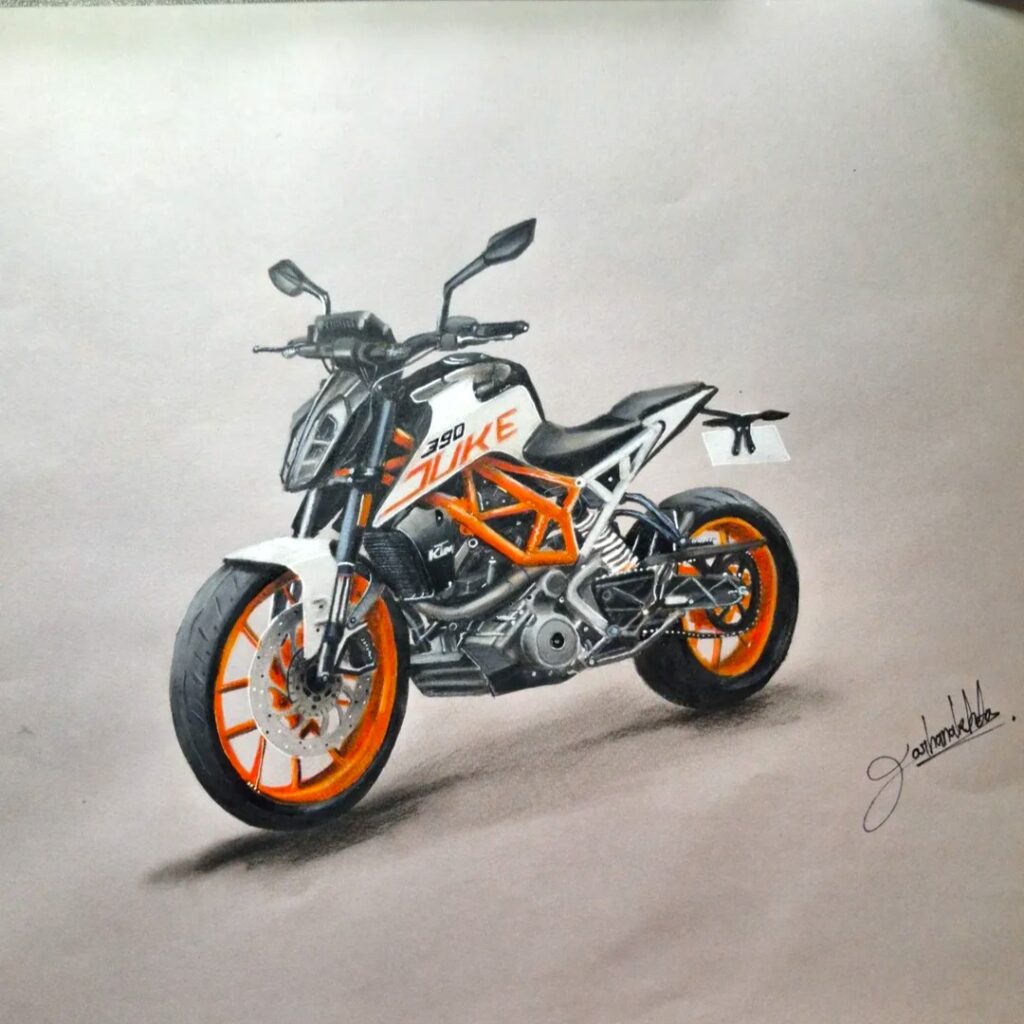
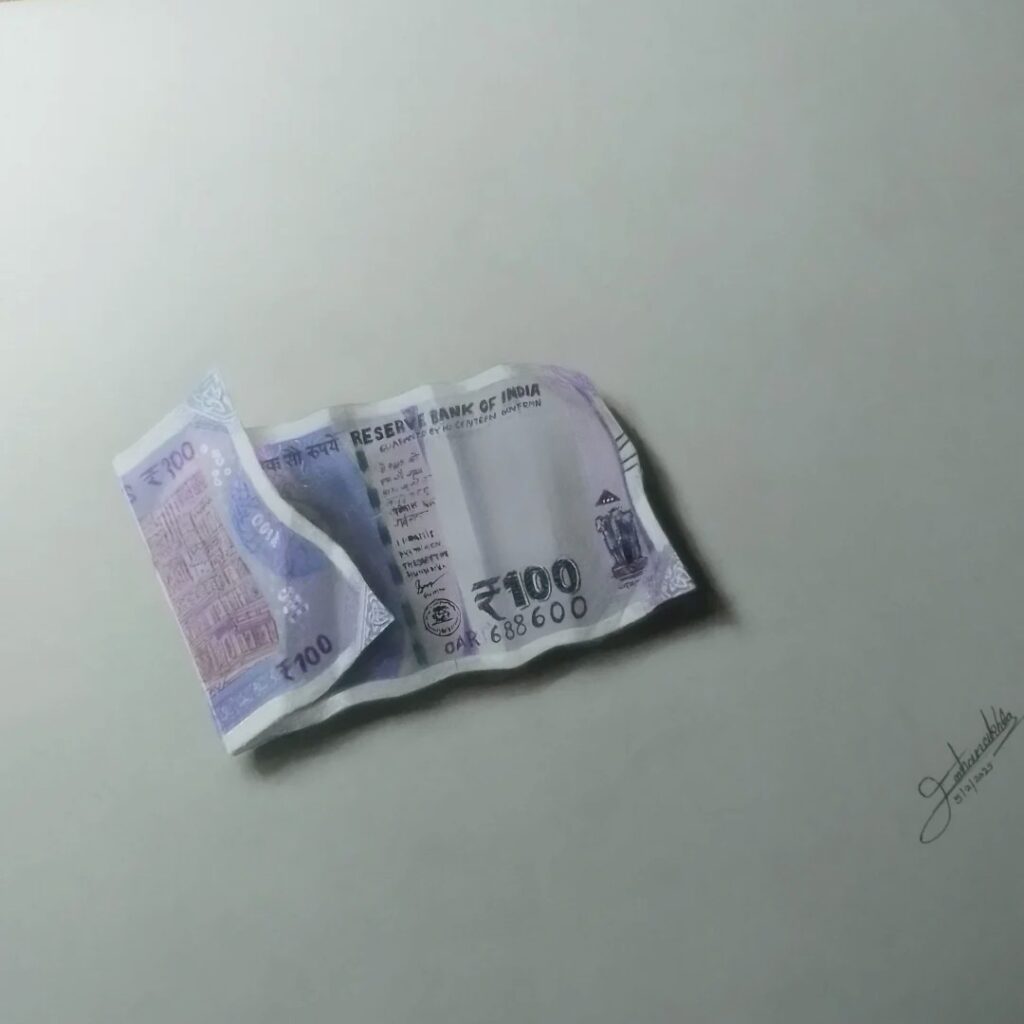
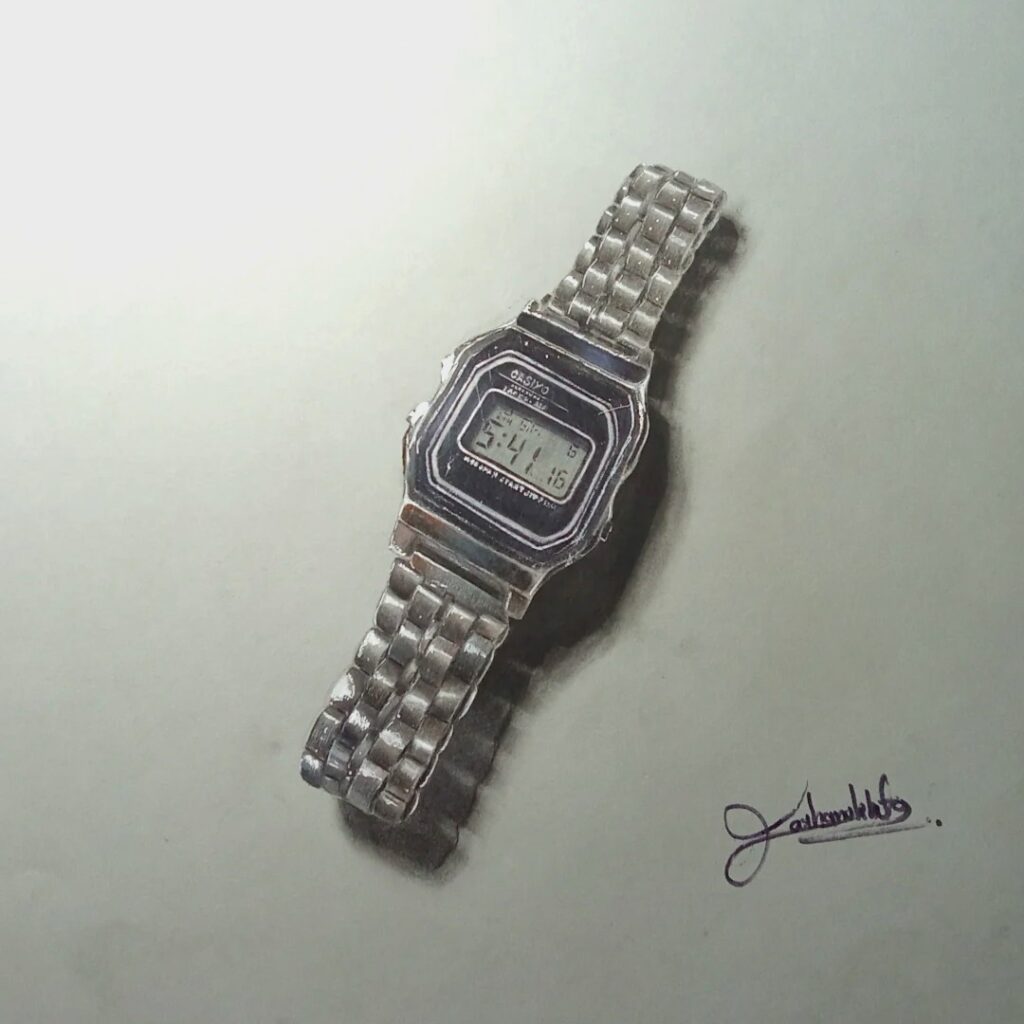
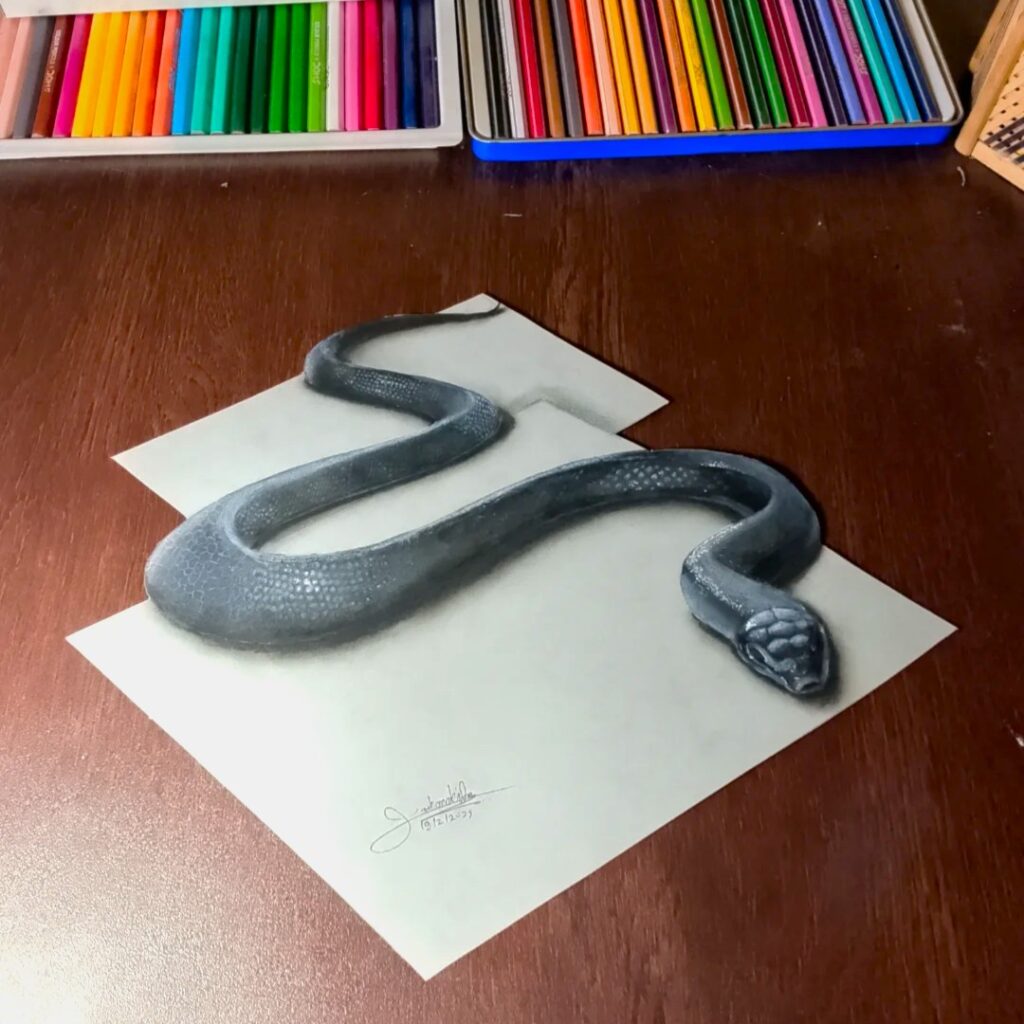
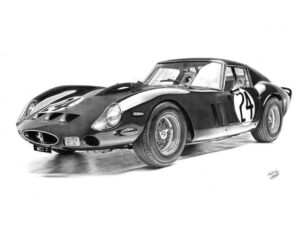
Bringing the world of blockbusters to the sketchpad, Farru Artist (A young artist from Mirzapur, India) specializes in hyper-realistic 3D Pencil drawings that feel larger than life. His expertise lies in combining traditional shading with anamorphic distortion, allowing iconic objects like Sports Car or Bike to literally “leap” off the page.
What sets Farru apart is his ability to blend vibrant colors with deep, realistic shadows, creating a level of depth that mimics high-definition digital renders. For fans of superhero art and optical illusions, his feed is a masterclass in how to turn a 2D surface into a 3D stage.
He is a prominent figure in the 3D pencil drawing and hyper-realism community on Instagram. His work is heavily focused on pop culture, superheroes, and mind-bending optical illusions.
Anamorphic Excellence: Like the other masters of this craft, he uses the “stretched perspective” technique. He often posts videos showing the transition from a flat, distorted drawing to a perfectly proportioned 3D figure as he moves the camera to the correct angle.
High Saturation and Detail: While he uses graphite for depth, he often incorporates colored pencils to make his subjects pop. His coloring style is vibrant, making his 3D art look more like a movie still than a sketch.
Educational Content: He frequently shares “step-by-step” reels, showing how he builds a 3D effect from a simple outline to the final shaded masterpiece, making his profile a great resource for learning artists.
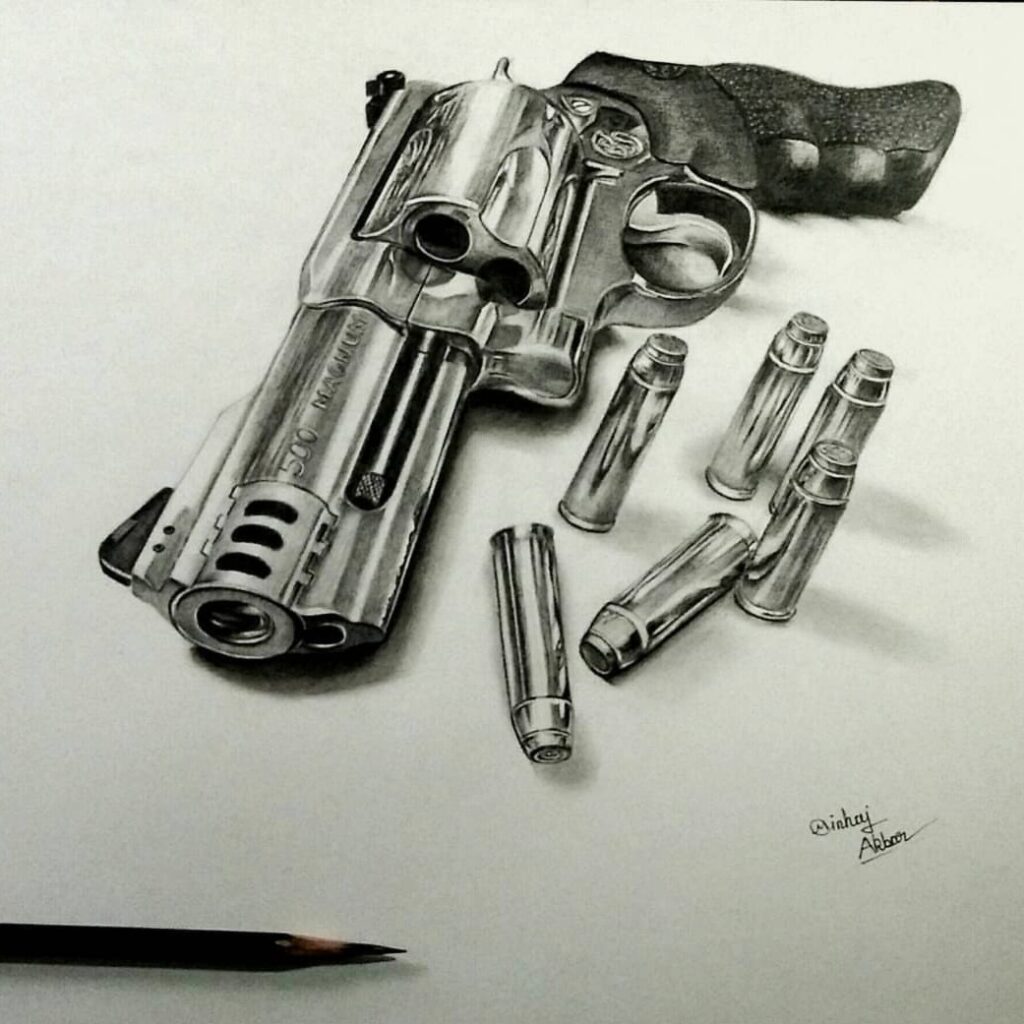
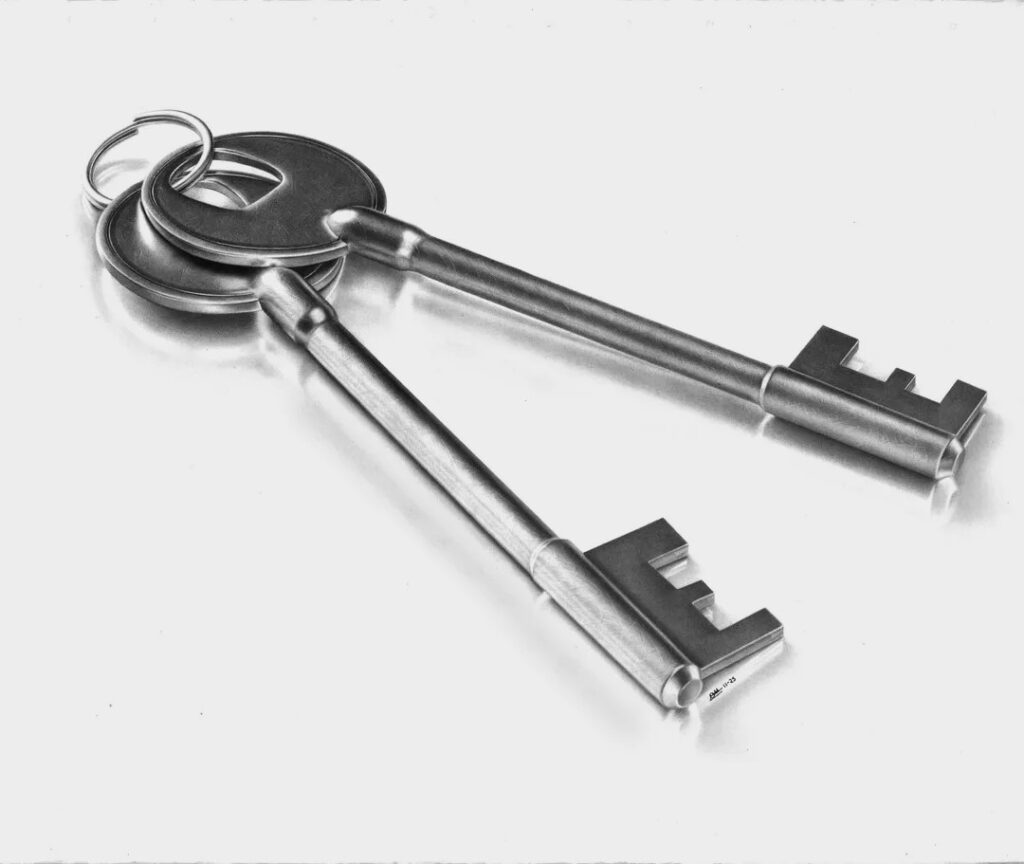
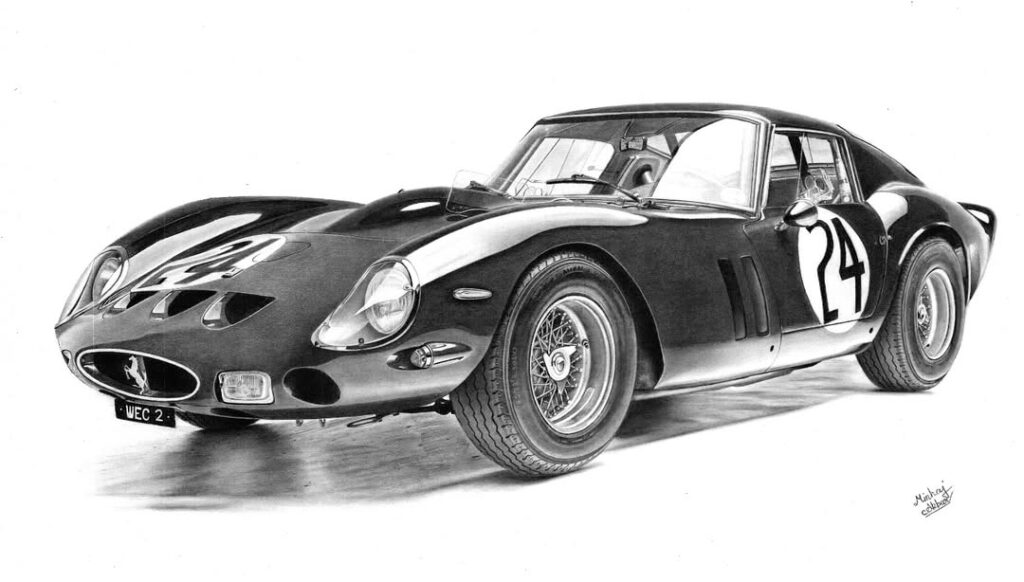
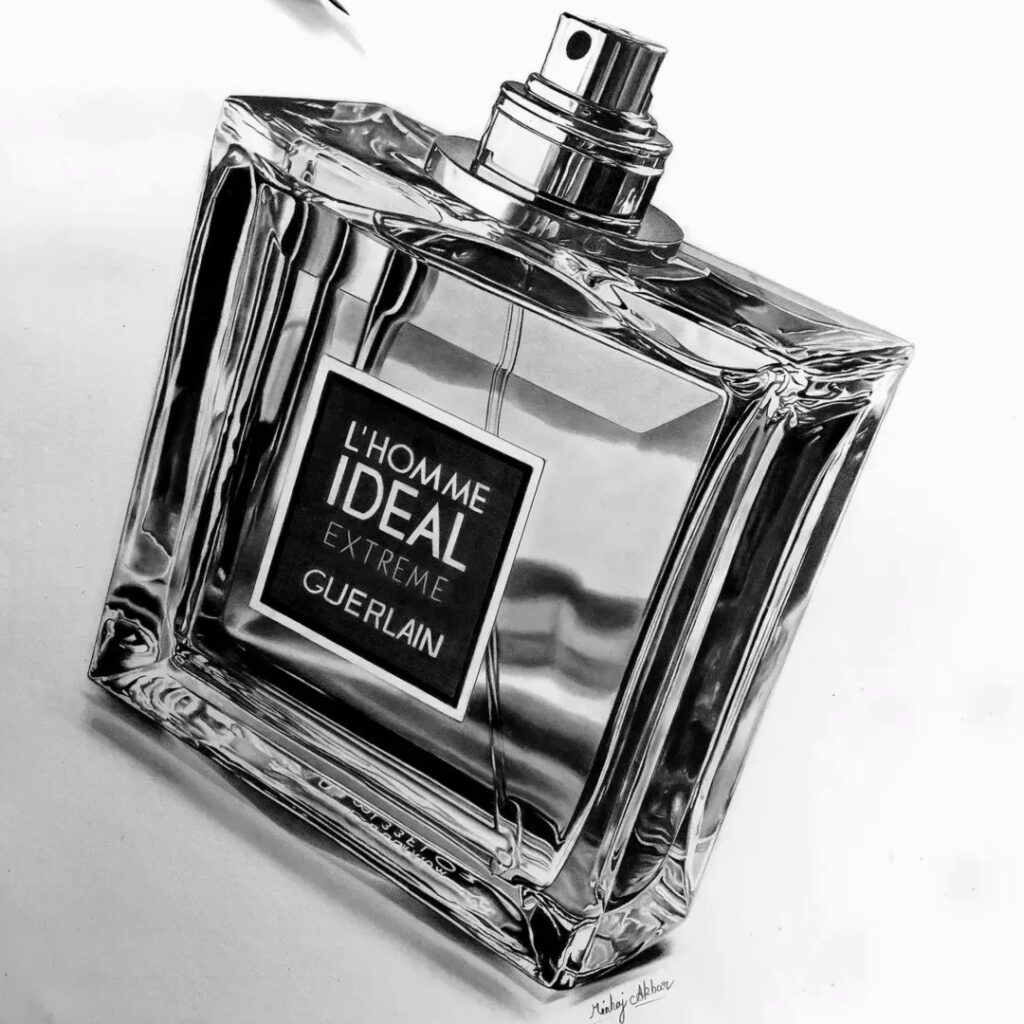
4. The Mind-Bending 3D Pencil Drawings of Akbar Arts
If you’ve ever scrolled through Instagram and had to rub your eyes to make sure a drawing wasn’t actually a physical object, you’ve likely encountered the work of Akbar Arts (also known as Akbar Momin). Based in India, this hyper-realistic artist has carved out a massive niche in the digital art world by mastering the fine line between 2D sketches and 3D reality.
Akbar is a virtuoso of anamorphic perspective—a technique where he intentionally distorts an image so that, when viewed from a specific angle, it appears to “stand up” or float off the paper. His feed is a masterclass in:
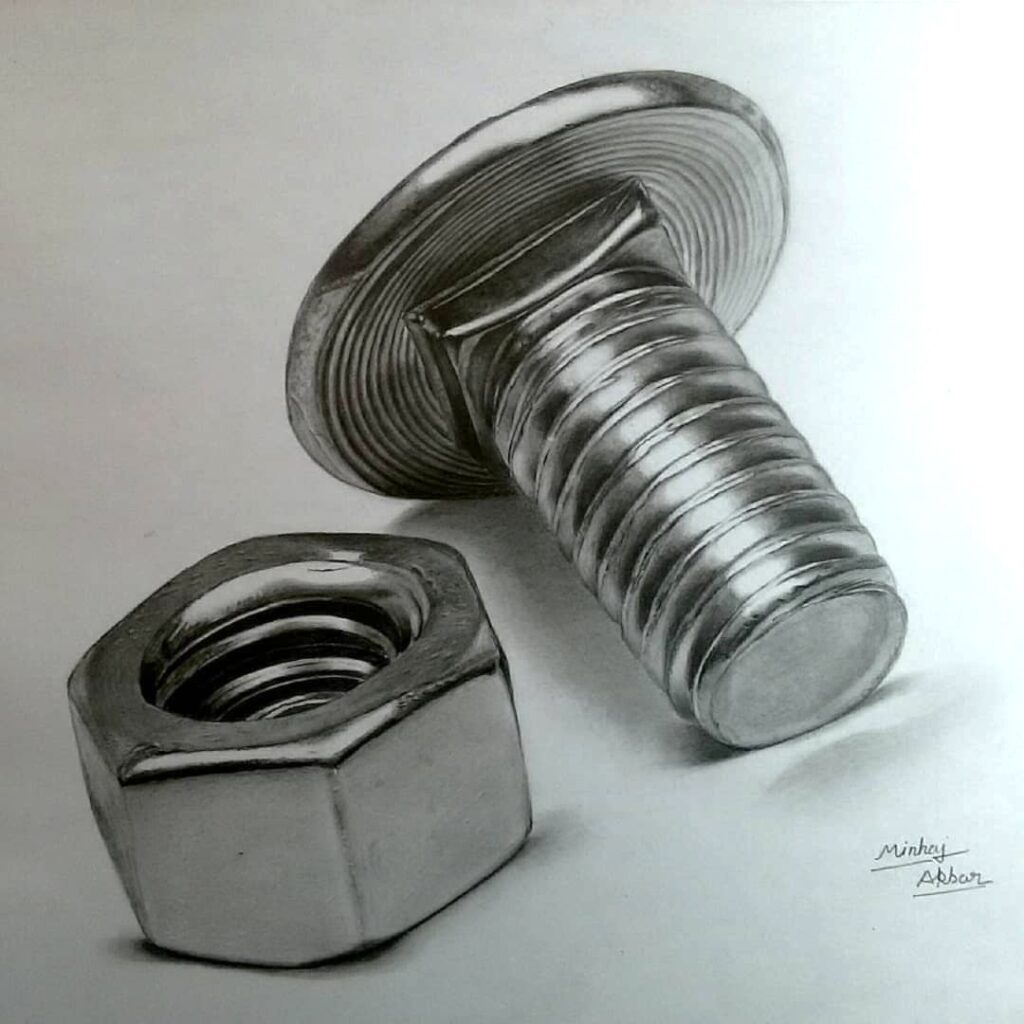
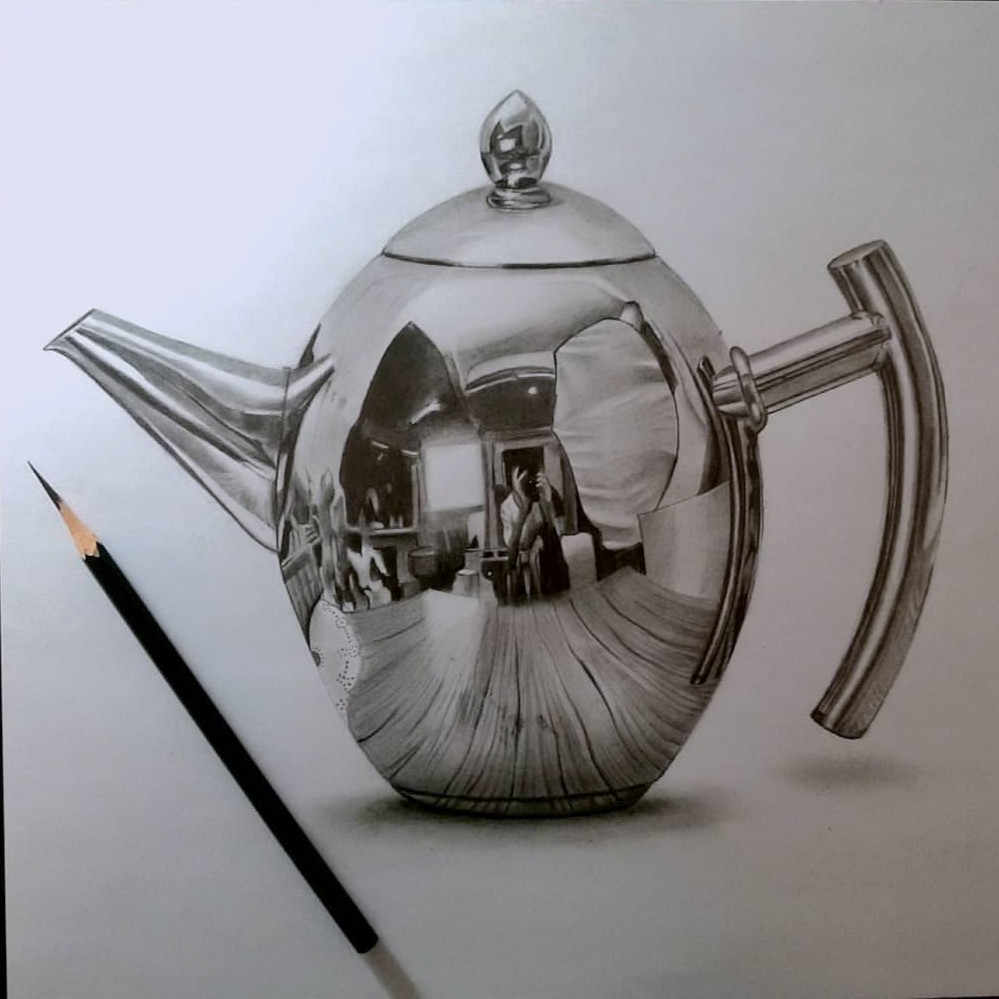
Hyper-Realism: From shimmering metallic textures to the glassy reflection of a human eye, his level of detail is microscopic.
Creative Mediums: While graphite is his go-to, he is known for pushing boundaries by using eclectic materials—ranging from tea leaves and sugar to even thousands of colored electric wires—to construct his 3D illusions.
Breaking the Border: A signature of his style is cutting or folding the paper to enhance the “pop-out” effect, making his drawings feel like tangible sculptures.
Whether he’s drawing a lifelike Iron Man or a simple hovering water droplet, Akbar Arts doesn’t just draw; he constructs visual puzzles that challenge how we perceive space and light.
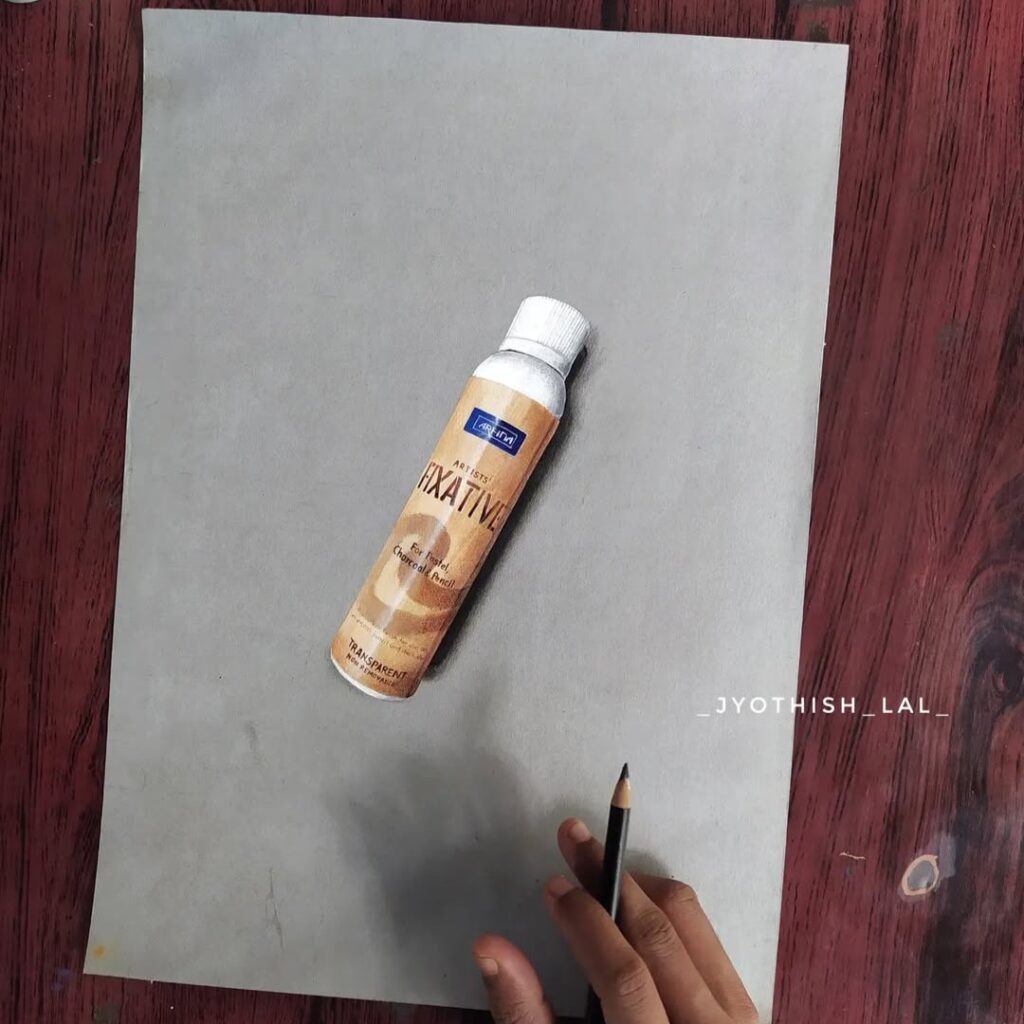
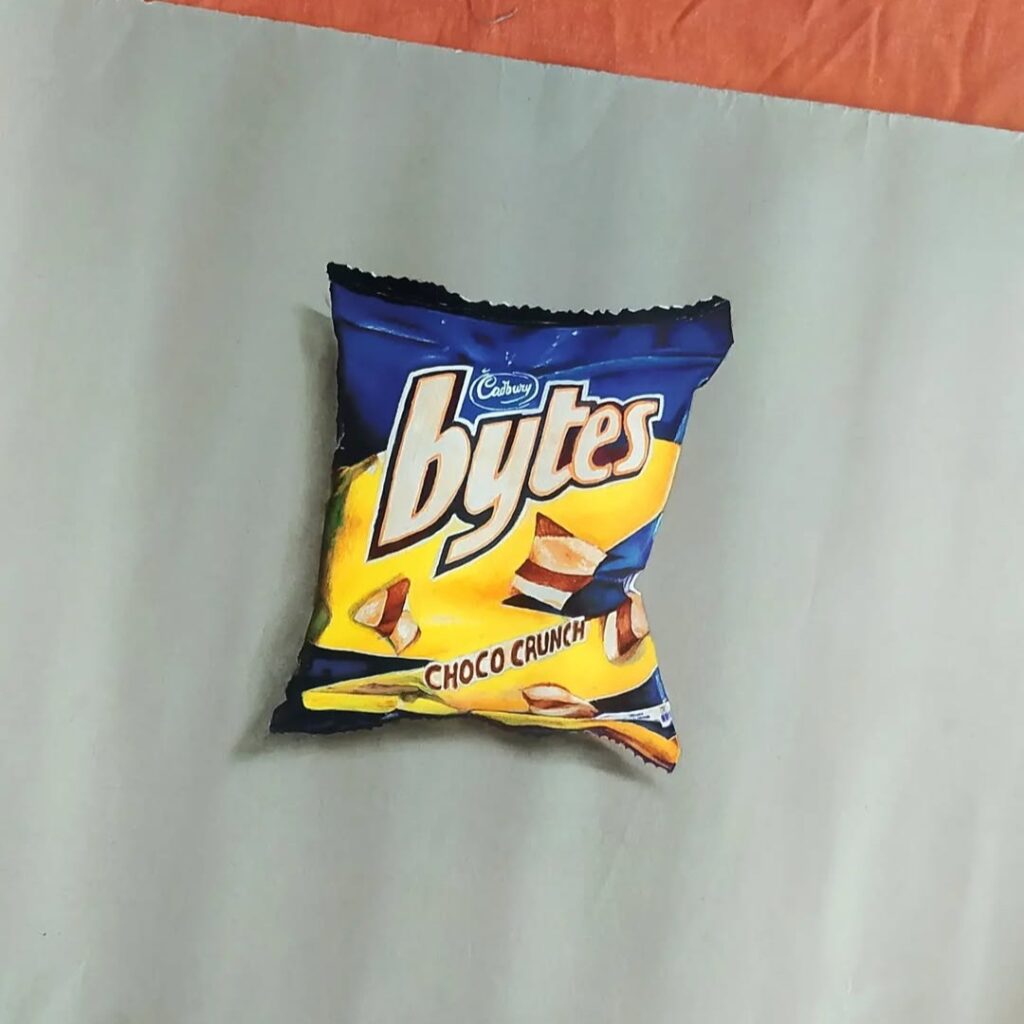
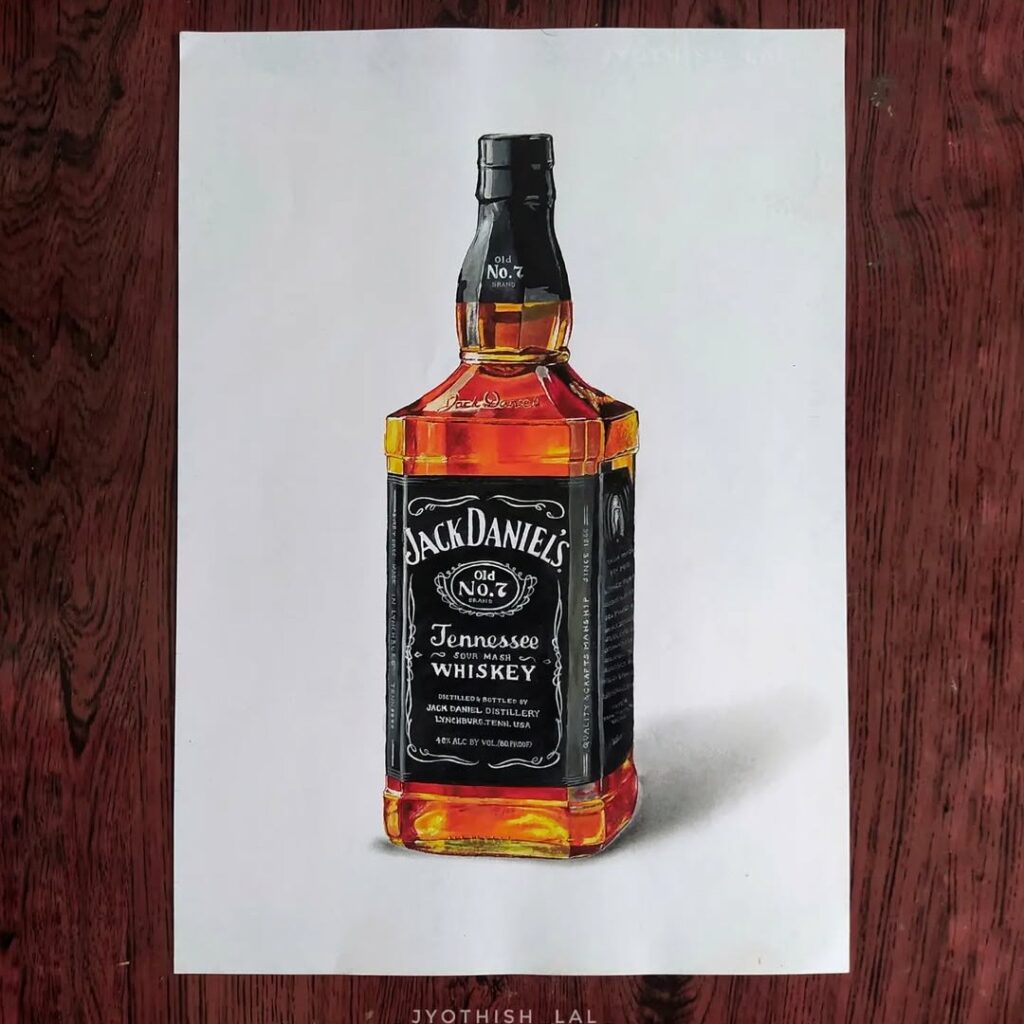
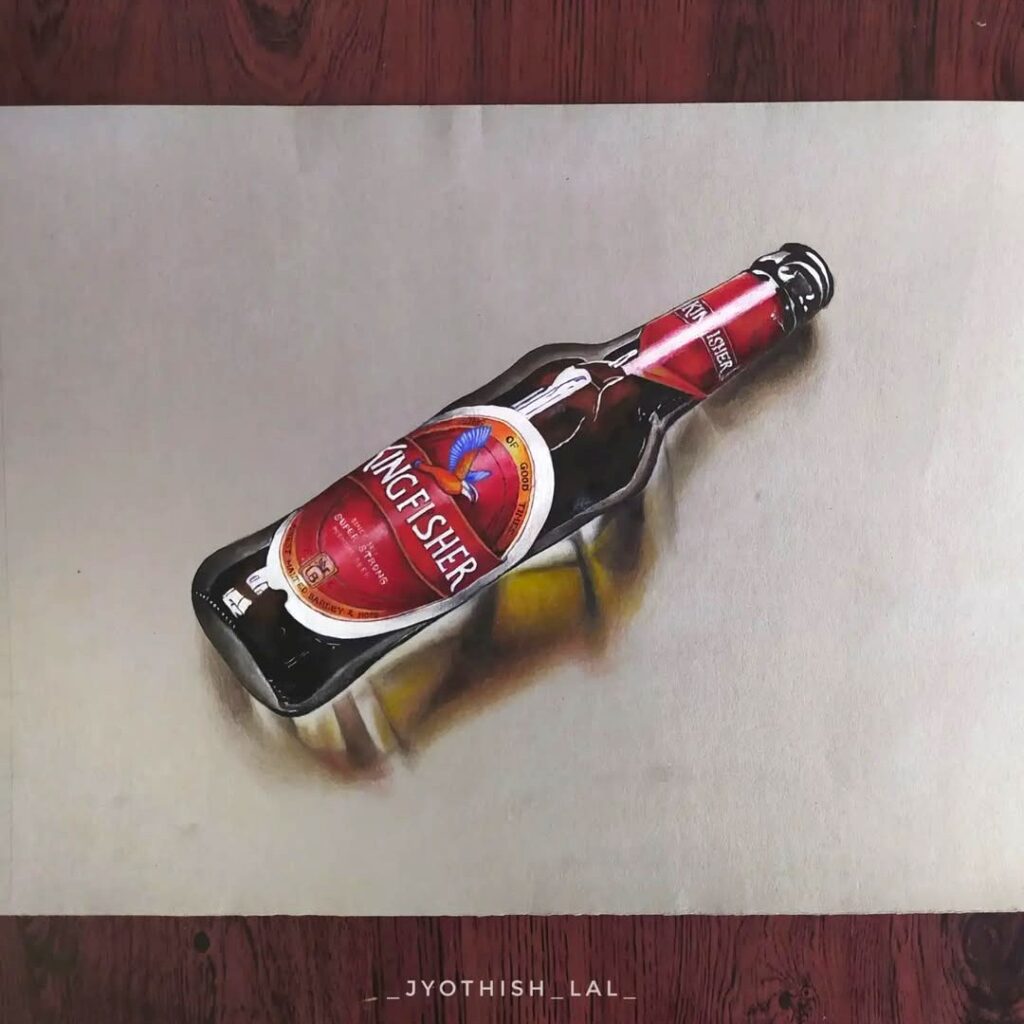
5. The Anatomical Illusions 3D Drawing of Jyothish Lal
If you want to see how pencil and paper can simulate life itself, look no further than Jyothish Lal. Jyothish takes the concept of 3D pencil drawing to a more organic level, specializing in hyper-realistic anatomy. Whether it’s a hand that seems to be reaching out from the page or a water droplet so clear you’d expect it to soak the paper, his work is defined by an incredible range of tonal values. By mastering the physics of light and the complexity of human texture, Jyothish creates art that doesn’t just look 3D—it looks alive.
While many 3D artists focus on objects, Jyothish often merges hyper-realistic portraiture with mind-bending illusions.
The “3D Portrait” Master: Unlike artists who focus solely on anamorphic objects (like soda cans), Jyothish often creates 3D effects with human features. His drawings of hands, eyes, and faces often appear to be physically emerging from the paper.
Mastery of Shading and Texture: His work is a masterclass in “skin texture.” He captures the subtle bumps, pores, and fine hairs that make a pencil drawing look like a high-definition black-and-white photograph.
The “Floating” Effect: He frequently uses the signature 3D technique of drawing an object (like a ring, a coin, or a butterfly) and placing a soft, realistic shadow beneath it, making it look like it’s hovering above the sketchbook.
Creative Compositions: He often experiments with “meta” art—drawings of hands that appear to be drawing themselves, or sketches that seem to be “peeling” off the page.
Which of these 3D masters blew your mind the most? there is no denying that the humble pencil is a powerful tool for illusion.
Now, we want to see your creativity in action! Grab a pencil, try out the “Shadow Gap” trick, and tag us in your first 3D sketch. You don’t need to be a professional to start—you just need to change the way you see the page.
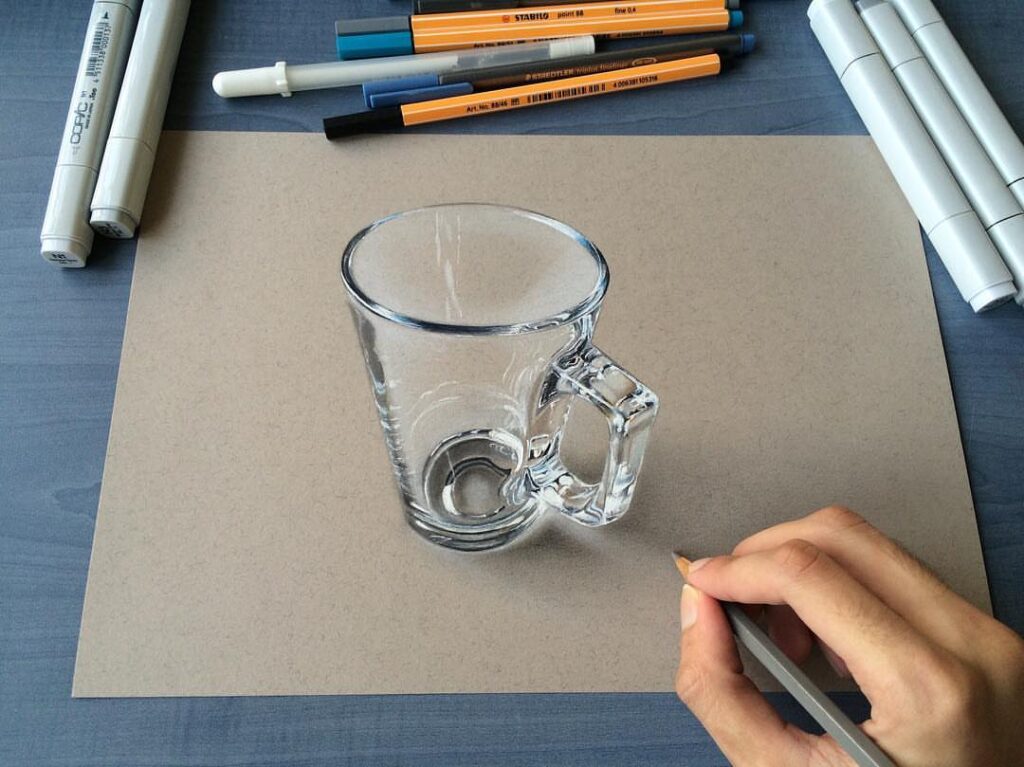
Which object should we try to draw in 3D next? A floating coffee mug, a realistic butterfly, or a “ripped” paper illusion? Let us know, and we might feature the best suggestion in our next tutorial!
Don’t forget to follow these artists on Instagram for your daily dose of inspiration:

0 Comments